Diabetic Foot and Charcot Reconstruction
Charcot foot is a serious complication of diabetic nerve damage in which the bones and joints of the foot weaken, fracture and collapse. A red, warm, swollen foot in someone with diabetes needs urgent assessment: NICE advises referral to a specialist foot team within one working day and keeping weight off the foot until treatment starts.
Diabetes can affect many body systems, including, and often under-appreciated, the feet. Problems range from minor toe deformities causing pressure points, blisters or pain, through to Charcot arthropathy: progressive bone and joint destruction that can lead to significant deformity, ulceration, infection and, at the extreme end, amputation. Early recognition and specialist management are essential.يمكن أن يؤثر مرض السكري على أجهزة الجسم المتعددة — بما في ذلك القدمان، وهو أمر كثيراً ما يُغفَل. تتراوح التداعيات بين تشوهات بسيطة في أصابع القدم تسبب نقاط ضغط وبثوراً أو ألماً، وصولاً إلى اعتلال مفاصل شاركو: حالة خطيرة تنطوي على تدمير تدريجي للعظام والمفاصل قد يُفضي إلى تشوهات جسيمة وتقرحات وعدوى وفي أقصى الحالات إلى البتر. ويُعدّ التشخيص المبكر والرعاية المتخصصة أمرين بالغَي الأهمية.
The scale is large. Diabetes UK reports that over 4.7 million people in the UK live with a diabetes diagnosis, and that every week diabetes leads to 184 amputations. Foot ulcers and amputations remain important complications of diabetes.
Imagingالتصوير
The images below illustrate the severity of Charcot deformity and the extent of internal fixation used in reconstruction.تُوضّح الصور أدناه شدة تشوه شاركو ومدى التثبيت الداخلي المستخدم في عملية إعادة البناء.
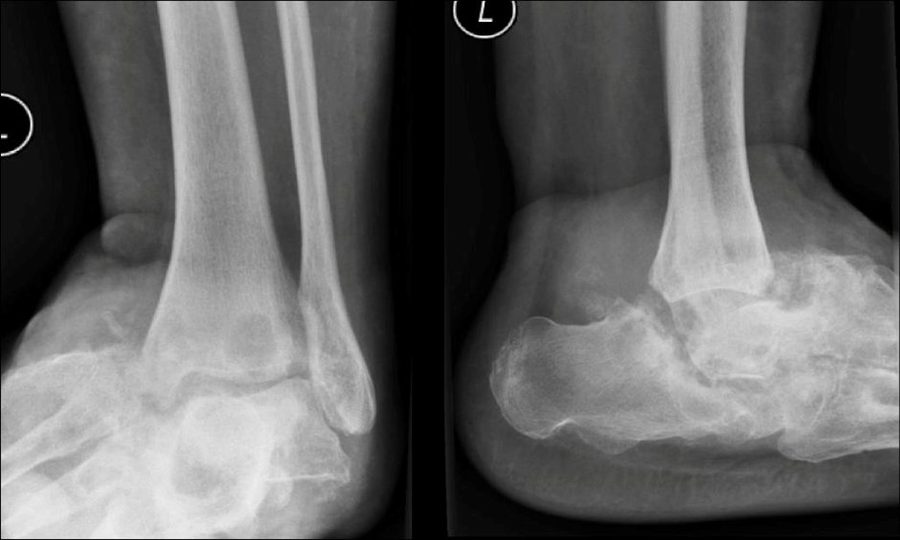
Pre-operative: AP and lateral X-rays demonstrating Charcot deformity with severe hindfoot and ankle joint destructionما قبل الجراحة: أشعة سينية أمامية وجانبية تُظهر تشوه شاركو مع تدمير شديد في مفاصل الرسغ الخلفي والكاحل
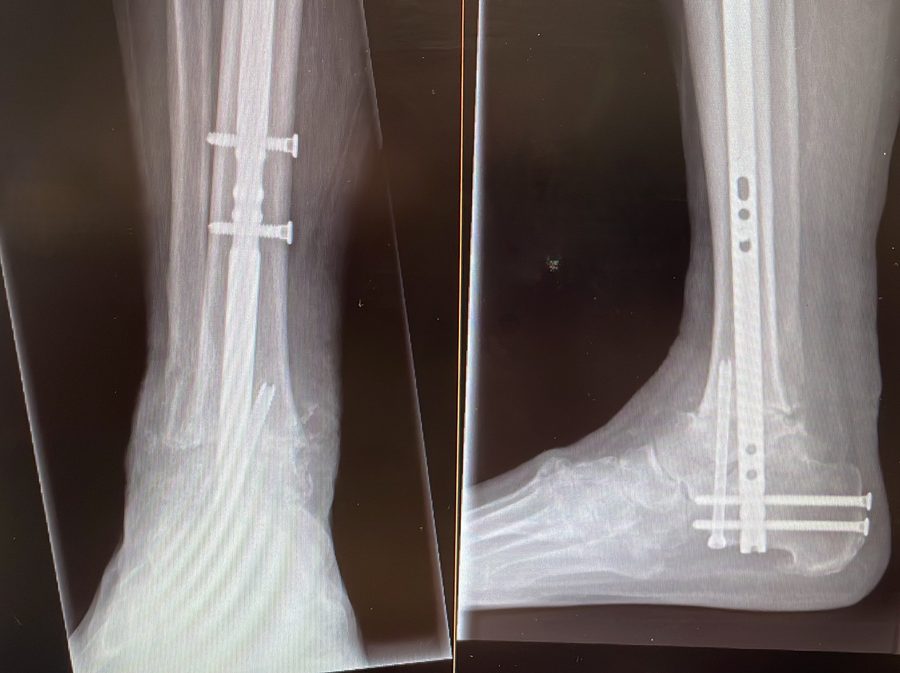
Post-operative: AP view demonstrating tibiotalocalcaneal intramedullary nail with locking screwsما بعد الجراحة: صورة أمامية تُظهر المسمار النخاعي الظنبوبي العقبي مع مسامير التثبيت
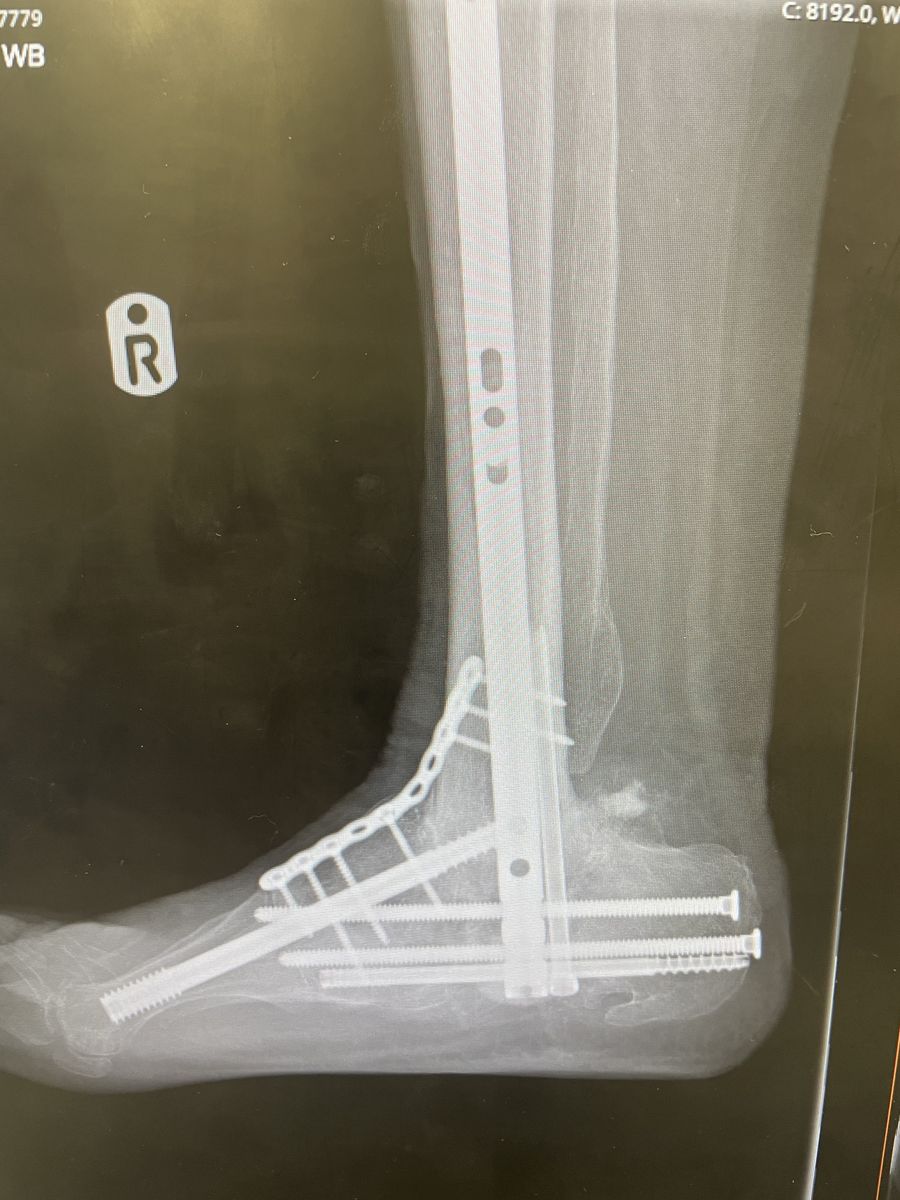
Post-operative: Lateral view showing nail and cross-screw construct with correction of deformityما بعد الجراحة: صورة جانبية تُظهر تركيب المسمار والمسامير المتقاطعة مع تصحيح التشوه
Symptomsالأعراض
- Acute Charcot: redness, warmth and swelling of the foot, often with little or no pain because of nerve damage. NICE advises thinking of Charcot even when there is no deformity or pain.
- Deformity: from a simple hammer toe to a rocker-bottom midfoot or severe hindfoot and ankle collapse.التشوه — يتراوح بين إصبع قدم مطرقي بسيط وقدم هزّاز في منتصف القدم أو انهيار شديد في الرسغ الخلفي والكاحل
- Callosities: thickened skin over bony prominences, a warning sign of abnormal pressure.المسامير الجلدية — سماكة في الجلد فوق البروزات العظمية ناجمة عن ضغط غير طبيعي؛ وقد تُصبح مؤلمة وتُشكّل إشارة تحذيرية للحمل الميكانيكي الزائد
- Ulceration: skin breakdown over a deformity or tight tendon, with a risk of deep infection.التقرّح — يمكن أن يُسبب التشوه العظمي أو اختلال التوتر الوتري تفككاً جلدياً يُفضي إلى قروح مفتوحة معرّضة لخطر العدوى العميقة وإذا تُركت دون علاج فقد تستوجب البتر
If you have diabetes and a hot, swollen foot, or a new wound, do not wait for it to settle.
Non-surgical treatmentالعلاج غير الجراحي
The first aim is to take pressure off the foot so that the bone settles and any ulcer heals.
- Total Contact Casting (TCC): the gold-standard offloading technique for active Charcot and plantar ulceration, spreading load evenly across the foot and lower leg. NICE NG19 advises a non-removable offloading device where possible.الجبيرة الكاملة التماس (TCC) — المعيار الذهبي لتخفيف الحمل في شاركو النشط والتقرح الأخمصي؛ توزع الحمل بالتساوي على القدم وأسفل الساق بأكملها لتعزيز الشفاء
- Orthotic footwear: custom-moulded insoles and specialist diabetic shoes to redistribute pressure once the foot is stable.الأحذية التقويمية — نعلات مصمَّمة خصيصاً وأحذية سكري متخصصة لإعادة توزيع الضغط وحماية المناطق الحساسة
Most diabetic foot ulcers sit over a bony prominence or are caused by a tight tendon. The aim of treatment is to remove the pressure that caused the ulcer, so it heals and stays healed.
When surgery helpsالخيارات الجراحية
Surgery is tailored to the extent of the deformity, any ulceration and your overall health. Options include:تُحدَّد الجراحة وفقاً لدرجة التشوه والتقرح والحالة الصحية العامة للمريض. وتشمل الخيارات المتاحة:
- Simple tendon releases for flexible toe deformities causing ulcers on the toes.إطلاق الأوتار البسيط — لتشوهات أصابع القدم المرنة المسببة لقروح رقمية؛ يُصحح اختلال التوازن العضلي المؤدي إلى نقطة الضغط
- Exostectomy: removal of a bony prominence that is causing skin breakdown, without major reconstruction.استئصال النتوء العظمي — إزالة جراحية للبروز العظمي المسبب مباشرةً لتفكك الجلد أو التقرح، دون الحاجة إلى إعادة بناء جراحية كبرى
- Charcot reconstruction: corrective osteotomies (bone cuts) to restore alignment, fixed with plates, intramedullary beams and/or rods. The aim is a stable, plantigrade foot that fits a shoe or brace and stays free of ulcers.إعادة بناء شاركو — إجراء معقد يشمل قطع العظام التصحيحي لاستعادة المحاذاة، يعقبه تثبيت داخلي بالصفائح والعوارض النخاعية و/أو القضبان
Risks include wound infection or breakdown (a particular concern in diabetes), non-union or malunion, blood clots, the need for further surgery or removal of metalwork, and progression to amputation despite surgery.
Recovery timeline after reconstructionالتعافي
- 0–12 weeks: total contact cast, strictly non-weight-bearing. A Böhler walker may be added to help mobility and healing.
- 12 weeks and beyond: gradual move to partial weight-bearing, guided by clinical assessment and imaging.
- Long term: custom orthotic footwear indefinitely to protect the foot and prevent recurrence. A shoe raise may be needed for leg length difference, and ankle movement will be significantly reduced.
| Timeframeالإطار الزمني | What to Expectما يمكن توقعه |
|---|---|
| 0–12 weeks0–12 أسبوعاً | Total contact cast, strictly non-weight-bearing. A Böhler walker may be incorporated to assist with mobility and promote wound healing and bony union.جبيرة كاملة التماس مع منع تحميل الوزن تماماً. قد يُستخدم مشاية بولر لتحسين الحركة وتعزيز التئام الجرح والتوحيد العظمي. |
| 12 weeks+أكثر من 12 أسبوعاً | Gradual transition to partial weight-bearing, guided by clinical assessment and imaging evidence of healing.الانتقال التدريجي إلى تحميل وزن جزئي بتوجيه من التقييم السريري والأدلة التصويرية على الشفاء. |
| Long-termعلى المدى البعيد | Supportive, custom orthotic footwear required indefinitely to protect the reconstructed foot and prevent recurrence.يُلزَم المريض باستخدام أحذية تقويمية داعمة مصممة خصيصاً بصفة دائمة لحماية القدم المُعاد بناؤها ومنع الانتكاس. |
To discuss your symptoms with Mr Hester, book a consultation.لمناقشة أعراضك مع السيد هيستر، احجز استشارة.
Additional Considerationsاعتبارات إضافية
Leg length discrepancy: An anticipated leg length discrepancy may necessitate a shoe raise following reconstruction.تفاوت طول الطرفين: قد يستلزم تفاوت متوقع في طول الطرفين استخدام رافعة للحذاء عقب إعادة البناء.
Range of movement: Ankle range of movement will be significantly reduced, with some partial compensation from the midfoot expected over time.نطاق الحركة: سيتراجع نطاق حركة الكاحل بصورة ملحوظة، مع توقع تعويض جزئي من منتصف القدم مع مرور الوقت.
Risks of Surgeryمخاطر الجراحة
- Pain, bleeding and haematoma formationالألم والنزيف وتكوّن الأورام الدموية
- Wound infection or dehiscence — of particular concern in diabetic patients with impaired healingعدوى الجرح أو انفراجه — وهو أمر يستوجب عناية خاصة لدى مرضى السكري ممن يعانون من ضعف التئام الجروح
- Scarring and neurovascular injuryتكوّن الندبات وإصابة الأوعية الدموية والأعصاب
- Deep vein thrombosis (DVT) or pulmonary embolism (PE)الجلطة الوريدية العميقة (DVT) أو الانصمام الرئوي (PE)
- Non-union or malunion — failure of bone to heal in the correct position, which may require further surgeryعدم التئام العظم أو سوء التئامه — أي عجز العظم عن الشفاء في الوضع الصحيح، مما قد يستلزم إجراء جراحة إضافية
- Need for revision surgery or removal of metalworkالحاجة إلى جراحة مراجعة أو إزالة المعدن
- Risk of progression to amputation despite surgical interventionخطر التطور نحو البتر على الرغم من التدخل الجراحي
How Mr Hester can help
Mr Hester is part of the internationally renowned King's Diabetic Foot Centre, accepting referrals from all over the country, and works alongside a specialist endocrine physician to provide diabetic foot care in the private sector. Treatment is planned with colleagues in vascular surgery, diabetology, plastic surgery, microbiology, podiatry and orthotics. He has published on the causes, epidemiology and outcomes of Charcot arthropathy (Hester and Kavarthapu, Foot and Ankle Clinics 2022).
He consults at The London Clinic, Cromwell Hospital, King Edward VII's Hospital and HCA The Shard, and in the NHS at King's College Hospital. Self-pay patients do not need a referral. To book, call 020 7046 8004.
Limb Salvage — Transverse Tibial Transport (TTT)إنقاذ الطرف — النقل العرضي للظنبوب (TTT)
For the most severe cases — where there is critical vascular compromise not amenable to further revascularisation, often with established ulceration, and where amputation has been advised — limb salvage may still be possible. These extraordinarily challenging situations can be amenable to Transverse Tibial Transport (TTT), a technique that harnesses the body own regenerative biology to restore blood flow and promote wound healing.في أشد الحالات خطورةً — حيث يوجد خلل وعائي حرج لا يستجيب لمزيد من محاولات إعادة التوعية، وغالباً ما يترافق مع تقرحات راسخة وقد أُشير فيها بالبتر — قد يظل إنقاذ الطرف ممكناً. وهذه الحالات البالغة التعقيد قد تستجيب لأسلوب النقل العرضي للظنبوب (TTT)، وهو تقنية تستثمر قدرات الجسم التجديدية الذاتية لاستعادة تدفق الدم وتعزيز التئام الجروح.
TTT works on the principle of distraction osteogenesis: a small segment of the tibia is surgically divided and slowly transported across the bone using an external fixator. This controlled mechanical stimulus triggers the release of growth factors and angiogenic signals, driving the formation of new blood vessels throughout the limb — a process known as the vascular crane phenomenon. The result is improved perfusion to ischaemic tissue, healing of otherwise intractable ulcers, and preservation of the limb.يقوم TTT على مبدأ تشتيت تكوّن العظم: تُقسَّم جراحياً قطعة صغيرة من الظنبوب ثم تُنقَل ببطء عبر العظم باستخدام جهاز تثبيت خارجي. يُطلق هذا التحفيز الميكانيكي المتحكم سلسلة من عوامل النمو والإشارات الوعائية التوليدية، مما يحرّض تشكّل أوعية دموية جديدة في جميع أنحاء الطرف — وهي عملية تُعرف بـظاهرة الرافعة الوعائية. والنتيجة تحسّن التروية في الأنسجة الإقفارية، والتئام القروح المستعصية، والحفاظ على الطرف.
Mr Hester was the first surgeon in the United Kingdom to use the Cybion TTT system — a purpose-built, precision-engineered device that enables controlled, incremental tibial transport with exceptional reproducibility. This offers patients who have been told amputation is their only option a genuine chance of limb salvage.كان السيد هيستر أول جراح في المملكة المتحدة يستخدم نظام Cybion للنقل العرضي للظنبوب — جهاز مُصمَّم لهذا الغرض بدقة هندسية عالية، يُتيح نقلاً ظنبوبياً تدريجياً متحكماً به بقابلية استنساخ استثنائية. يمنح هذا الجهاز المرضى الذين قيل لهم إن البتر خيارهم الوحيد فرصةً حقيقيةً لإنقاذ الطرف.
Clinical Images — Limb Salvage (TTT)
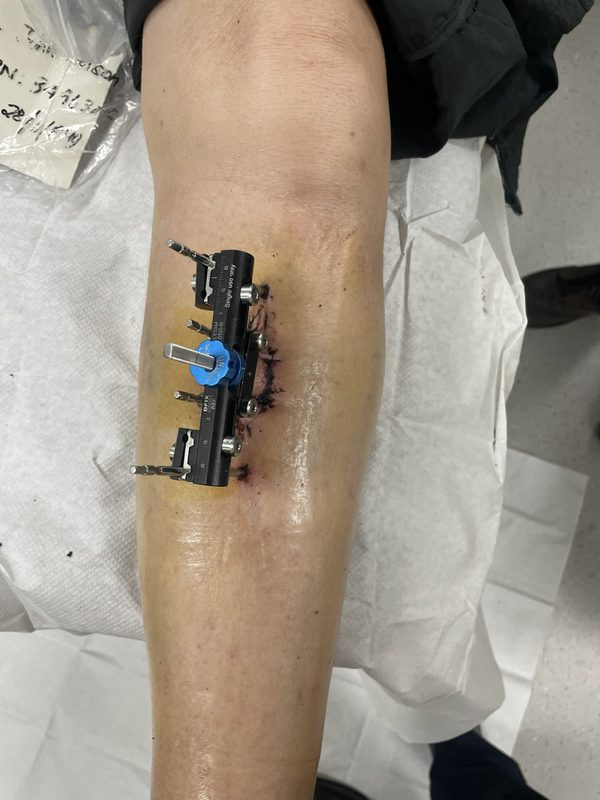
The Cybion Transverse Tibial Transport system mounted on the tibia — Mr Hester was the first surgeon in the UK to use this deviceنظام Cybion للنقل العرضي للظنبوب مثبّتًا على الظنبوب — كان السيد هيستر أول جراح في المملكة المتحدة يستخدم هذا الجهاز
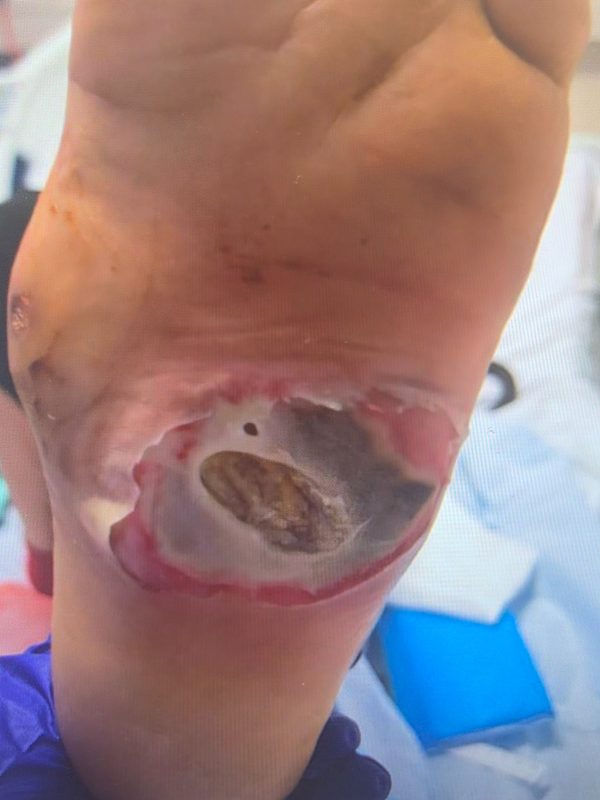
Pre-TTT: extensive plantar ulceration with exposed tissue, previously offered amputationقبل TTT: تقرّح أخمصي واسع مع نسيج مكشوف، كان قد أُحيل سابقًا للبتر
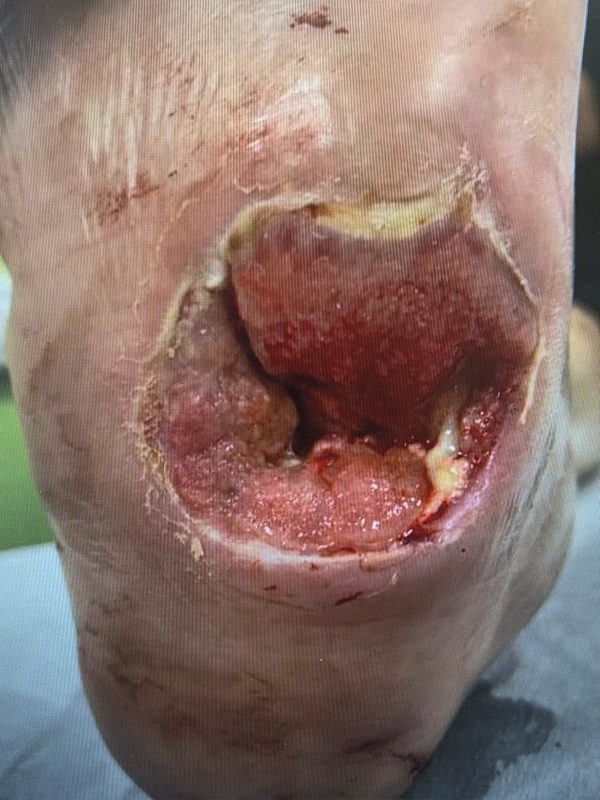
Pre-TTT: severe heel ulceration with necrotic tissue and vascular compromiseقبل TTT: تقرّح شديد في الكعب مع نسيج نخري وضعف الإمداد الوعائي
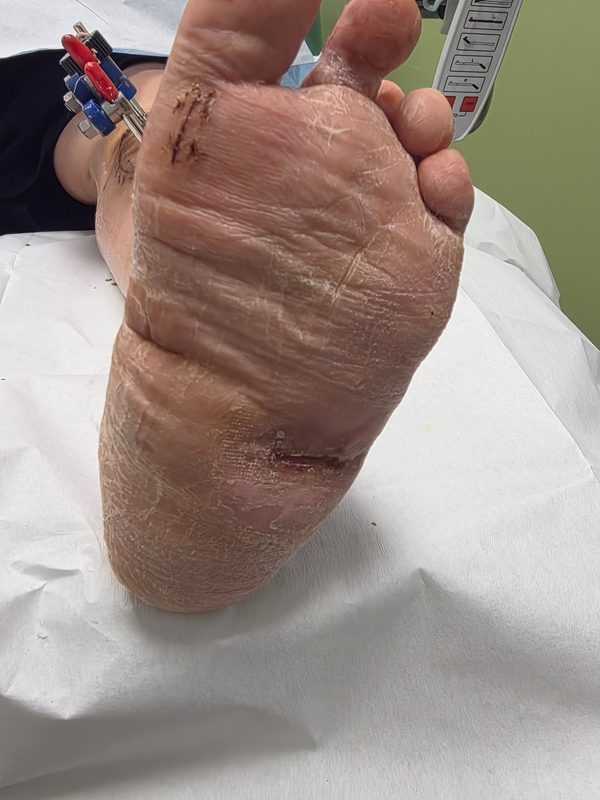
Post-TTT: ulcer healed and limb salvaged following Transverse Tibial Transportبعد TTT: التئام القرحة وإنقاذ الطرف عقب النقل العرضي للظنبوب
If you or a patient has been advised that amputation is the only option, contact Mr Hester to discuss whether TTT limb salvage may be possible.إذا أُخبرتَ أنتَ أو أحد مرضاك بأن البتر هو الخيار الوحيد، تواصل مع السيد هيستر لمناقشة ما إذا كان إنقاذ الطرف عبر TTT ممكناً.
Frequently Asked Questions
Sources
- Diabetic foot problems: prevention and management (NG19). NICE, 2015 (updated). https://www.nice.org.uk/guidance/ng19
- Hester T, Kavarthapu V. Etiology, Epidemiology, and Outcomes of Managing Charcot Arthropathy. Foot Ankle Clin. 2022;27(3):583–594. PMID: 36096553. https://pubmed.ncbi.nlm.nih.gov/36096553/
- Feet and diabetes. Diabetes UK. https://www.diabetes.org.uk/about-diabetes/looking-after-diabetes/complications/feet
- Diabetes statistics. Diabetes UK. https://www.diabetes.org.uk/about-us/about-the-charity/our-strategy/statistics
Items patients often find useful in the first two weeks. Always follow your surgical team's instructions; these are general suggestions, not medical advice. As an Amazon Associate I earn from qualifying purchases.عناصر يجدها المرضى مفيدة غالباً في الأسبوعين الأولين. اتبع دائماً تعليمات فريقك الجراحي؛ هذه اقتراحات عامة وليست بديلاً عن المشورة الطبية. بصفتي شريكًا في برنامج Amazon Associates، أحصل على عمولة من عمليات الشراء المؤهلة.
As an Amazon Associate I earn from qualifying purchases. These are general suggestions, not a substitute for advice from your surgical team.بصفتي شريكًا في برنامج Amazon Associates، أحصل على عمولة من عمليات الشراء المؤهلة. هذه اقتراحات عامة، ولا تغني عن نصيحة فريقك الجراحي.
To discuss your condition with Mr Hester, please get in touch to arrange a consultation.لمناقشة حالتك مع السيد هيستر، يرجى التواصل معنا لترتيب استشارة.
Book a Consultation